If you have bought a new car recently and been disappointed in the quality of the paint, you’re not alone.
While overall automobile quality has gone up in recent years, the quality of automotive paint has declined – a lot. Some brands are worse than others, but the quality of paint on all brands has deteriorated. There are a number of reasons for that, but paint issues may be the biggest thing that new car buyers complain about.
And it’s not just a single issue, either. Buyers complain about a number of things — clear coat failure, premature fading, and rapid oxidation may lead the list. Complaining about paint problems to the dealer is no guarantee that the warranty will cover the damage.
Why this sudden decline in paint quality? There are several reasons, among them environmental regulations, manufacturing efficiencies, cost pressures, and the changing nature of automotive materials.
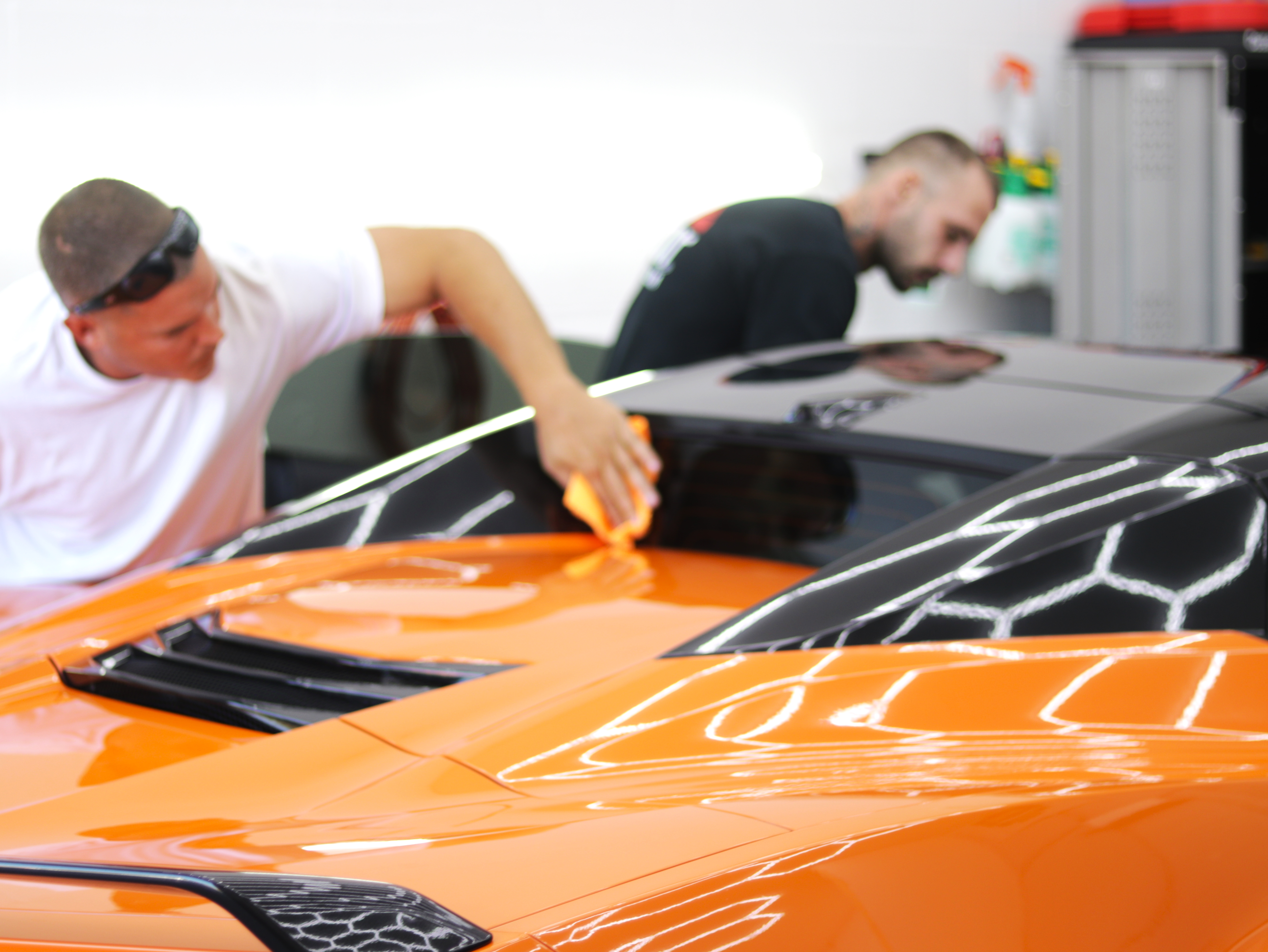
Let’s take a look at these issues one at a time:
ENVIRONMENTAL REGULATONS: Changes in environmental regs have dramatically changed paint chemistry. Automakers were forced to reduce volatile organic compounds (VOCs) in paint systems about 25 years ago. The result was a shift from solvent-based paints to water-borne basecoats covered by low-VOC clear coats. This change was good for the environment but bad for paint quality – the new paint offers less chemical and UV resistance than the old solvent-based paint. The water-based paints of today don’t attach to surfaces as well as the old solvent paints, and they don’t cure as hard as the old paints did, either.
MANUFACTURING COST-CUTTING: Today’s paint layers are thinner than the paint layers of yesterday. Thirty years ago a car might have had four-to-six mils of clear coat; today that layer might be more like two or three mils. The result: less UV protection and less scratch resistance. Want to check that? Take your new car to a paint shop and ask them to use their meter to measure your cars paint depth.
MANUFACTURING PROCESSES: Years ago, automotive paint was applied by skilled human sprayers. Today, paint is usually applied by robots. Robots provide speed and consistency, but they don’t lay down the thicker coats that an experienced human painter may deem to be necessary for a good, durable paint job.
DIFFERENT BODY MATERIALS: While older car bodies were mainly made of steel, newer car exteriors may also include aluminum, plastics or composites. These different materials may have different expansion/contraction rates, and so paint may bond to them differently. This may be a more significant problem in harsh or hot climates, like Florida’s. You may see significant paint degradation on panels most exposed to the sun, such as hoods and roofs.
CHANGED CONSUMER EXPECTATIONS: Today, most car buyers are focused on such things as tech features, safety systems, and fuel economy. They may pay considerably less attention to paint depth. Because of that, manufacturers may feel little pressure to provide better paint systems when consumer attention is focused elsewhere.
What can the consumer do about all this?
The best advice is to pick up your new car at the dealership and drive it directly to a specialized shop that provides ceramic coatings or paint protection film (PPF.)
-0-
In Tampa Bay, that shop is CoaterZ, which offers the highest-quality film and coatings as well as factory-trained technicians. It’s a wise investment – your car or truck will look as good at trade-in time as it did when it rolled out of the CoaterZ shop.
Two locations to serve you:
2824 Alt19 16235 N Florida Ave
Palm Harbor, FL 34683 Lutz, FL 33549
727-935-4621 (813) 467-8149
www.CoaterZ.com https://coaterz.com/lutz/
 The Paint Guy
Leave a comment